

CBSE Class 6 Science – Exploring Society:
India and Beyond – Takshila-DPS Pune- Patna-Coimbatore

AUTHOR
MBBS, DNB (DVL)
Dermatologist, Cosmetologist and Laser Surgeon
Nuleaf Skin Clinic and Hair Transplant Center, Undri, Pune
As a mother of twin daughters and a Consultant Dermatologist based in Undri, Pune, life is always a balancing act. Between busy clinic hours, parenting duties, and everyday chaos, I’ve been creating study notes since Class 4 to help my girls understand and revise their lessons better. Over the years, these weekend study sessions turned into a special tradition—discussing topics taught in school and turning them into organized, easy-to-revise notes.
The notes I’m sharing here are from the 2024–25 academic year of DPS Pune – Patna – Coimbatore, and cover Class 6 chapters. They include all the key points that are likely to be asked in exams, compiled from the Class 6 Exploring Society:India and Beyond , school study materials, class notes and school revision sheets.
Each page was made with care, love, and a hope to make learning feel a little easier—especially during exam time. If they help your child too, then this effort finds even more meaning.
If you find these notes useful, I’d love to hear from you in the comments section. And if you’d like me to upload notes on any particular topic from Class 6, feel free to send in your suggestions.
Don’t forget to subscribe to my blog for new updates, notes, and posts.
Wishing you and your child a wonderful academic year ahead!
Read more: CHAPTER 2: Oceans and ContinentsWarmly,
Gauri
Mom to twins
IMPORTANT POINTS
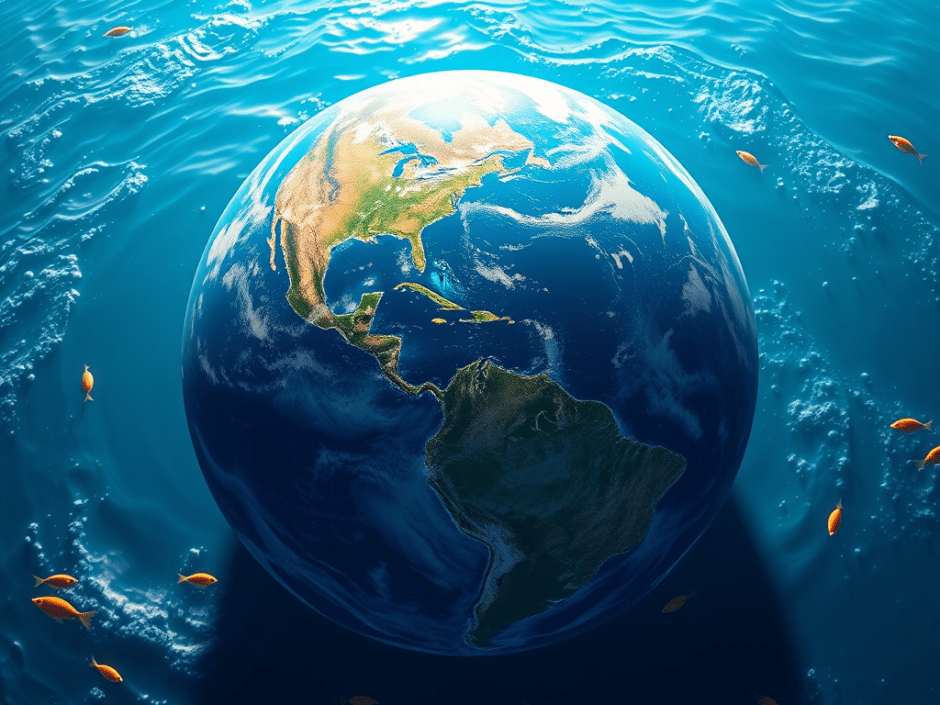
- Early astronauts lovingly called the Earth the ‘blue planet’
- 3/4th of the earth surface is covered with water and1/4th is covered by land.
- The emblem of the Indian Navy contains the motto Sam noh Varunah (pronounced ‘ŚhamnoVaruṇah’), which means, “Be auspicious to us, O Varuna.” This is an invocation to Varuṇa, a Vedic deity associated with the oceans, the sky, and water in general.
- Oceans and continents are not distributed equally between the Northern and Southern Hemispheres.
- The southern hemisphere has more water than the northern hemisphere.
- The oceans together hold most of the water available on the planet.
- But this seawater is salty and unfit for consumption by most land animals, including humans.
- Freshwater makes up a very small proportion of the planet’s water resources; it is found in glaciers, rivers, lakes, in the atmosphere and also underground (the last is called ‘groundwater’).
- The lines that divide the oceans on the map are no more than conventions — the natural world does not follow such boundaries.
- Seawater constantly flows across different oceans, sustaining a rich diversity of marine life. Many plant and animal species can be found across multiple oceans.
- The marine flora includes tiny plants called algae and all kinds of seaweeds;
- The marine fauna consists of thousands of species of colourful fish, dolphins, whales, and countless mysterious deep-sea creatures.
- Each part of the ocean, from the sun-lit surface to the dark depths, has its own diverse life forms.
- Clouds bring rain to the continents; for instance, the monsoon rains we in India expect every summer originate in the ocean — without such rains, our agriculture and all life will suffer
- The five Olympic rings, one of the symbols of the Olympic Games. They symbolise the gathering of sportspeople from all over the world. The rings were chosen to represent five inhabited continents — Africa, America, Asia, Australia and Europe.
- Greenland is the largest island in the world. You would have to add the areas of the 10 largest states of India to reach its size.
- India has more than 1,300 small islands! Those include two major groups — Andaman and Nicobar Islands in the Bay of Bengal and Lakshadweep Islands in the Arabian Sea.
NOTES
Definitions:
- Oceans: The largest water bodies we see on the globe are called ‘Oceans’. They are all interconnected and the level of water remains the same everywhere.
- Landmass: A large body of land is called a ‘landmass’.
- Continent: A large continuous expanse of land is called a ‘Continent’.
- Island: Pieces of land that are surrounded by water on all sides, are called islands. (Continents are also surrounded by water, but because they are so large, they are not considered islands.)
- Marine: Related to or found in the oceans and seas.
- Flora: The plant life of a particular region or period of time.
- Fauna: The animal life of a particular region or period of time.
Q.1) Why is the Earth known as the ‘Blue planet’?
Ans: The Earth’s surface is divided into oceans and continents of which almost three-fourths is covered with water and 1 /4th with land. 97% of this water is in the oceans. Hence, the Earth is called the ‘Blue planet’.
Q.2) Why are oceans and continents important?
Ans)
- Both oceans and continents play a vital role in shaping the climate of the Earth.
- They affect all aspects of life, including all plants and animals, and therefore, human life too.
Q.3) How many oceans does earth have?
Ans) The earth has five oceans:
- The Pacific Ocean, (Largest)
- The Atlantic Ocean,
- The Indian Ocean,
- The Southern (or Antarctic) Ocean.
- The Arctic Ocean (Smallest)
Q.4) Write about the features of the Pacific Ocean.
Ans:
- The Pacific Ocean is the largest and spreads to about 30% area of the earth.
- It is circular in shape.
- The deepest part of the earth — Mariana Trench lies under the Pacific Ocean.
- It is bounded by:
- Asia and Australia on one side
- North and South America on the other side.
Q.5) Write about the features of the Indian ocean.
Ans:
- The Indian Ocean is the third largest and only ocean named after a country (India/Bharat).
- It is shaped almost like a triangle.
- Its limits are :
- Asia to the North
- Africa to the West
- Australia to the East
- Southern Ocean in the South.
- The Arabian Sea to the west and the Bay of Bengal to the east are part of it.


Q.6) Describe the continent of Asia.
Ans:
- Asia occupies about 1/3rd of the Earth’s land area.
- It is separated from Europe by the Ural Mountains.
- Asia and Europe together are known as Eurasia.
- Asia is surrounded on three sides by oceans- Arctic (N) Pacific (E) & Indian (S).
Q.7) In what ways do oceans impact life on Earth, including human life?
Ans: Oceans impact life on Earth in the following ways:
- Climate:
- Oceans play a vital role in shaping the climate of the Earth.
- Oceans are a part of the water cycle which sustains agriculture, life on earth and replenishes the useable fresh water resources.
- Sustaining life:
- More than half of the world’s oxygen is produced by the oceans’ flora, which is why they are called ‘the planet’s lungs’
- Its biodiversity provides one global community with animal protein.
- Building Civilizations: From early times people have used oceans and seas to
- migrate to other regions,
- to trade in all kinds of goods
- to conduct military campaign;
- and exchange ideas.
- Cultural Significance: Oceans have also nourished the cultures of coastal people all over the world. Almost all of them have tales and legends about the sea, sea gods and goddesses, sea monsters and treasures from the sea — the oceans’ dangers but also their blessings.
Q.8) How can the ocean devastate the life of humans?
Ans:
- Oceans give rise to violent events with extreme rainfall, or strong winds such as cyclones which cause widespread damage to men and material.
- Tsunami, a natural disaster originating in the ocean, travels thousands of km, and causes loss of life and property.

Q.9) What is a Tsunami? Write a note on the tsunami which affected India in 2004.
Ans:
- Tsunami (Defn): A tsunami is a natural disaster characterised by a huge and powerful wave generally caused by a strong earthquake or a volcanic eruption at the bottom of the ocean.
- Tsunamis can travel thousands of kilometres and submerge coastal areas, causing widespread damage.
- On 26 December 2004, India and another 13 countries around the Indian Ocean were struck by a powerful tsunami caused by an earthquake in Indonesia. More than two lakh people lost their lives. In India, the Andaman and Nicobar Islands and the coasts of Tamil Nadu and Kerala were severely affected.
Q.10) How can Tsunamis be detected before they hit the coast?
Ans:
- Tsunamis are rare but very destructive. They can often be detected before they hit a coast.
- Many countries collaborate in such ‘early warning systems’.
- There is, in particular, an Indian Ocean Tsunami Warning System, to which many countries, including India, contribute.
- This helps to take measures to protect lives and property.
Q.11) Who handles disasters in India?
Ans:
- Events that lead to loss of life and property are handled under disaster management.
- India has its own ‘National Disaster Management Authority’ to deal with all kinds of disasters.
Q.12) In what ways does the continent impact human life on the Earth?
Ans:
- The soil cover provides various forms of vegetation like forests and grasslands for grazing, agriculture and human settlements.
- Continents along with oceans are a rich source of minerals essential for economic development.
- Continents are home to a vast variety of fauna where the animals range from tigers to lizards to moles, bacteria and organisms that live underground and over ground.
- The vast and ever growing human population with its wasteful, modern lifestyle and greenhouse gases contributing to climate change, in turn impacts life in oceans and on continents.
| Count of continents (in alphabetical order) | |
| Four continents | Africa-Eurasia, America, Antarctica, Australia |
| Five continents | Africa, America, Antarctica, Australia, Eurasia |
| Six continents | Africa, Antarctica, Australia, Eurasia, North America, South America |
| Seven continents | Africa, Antarctica, Asia, Australia, Europe, North America, South America |

Q.13) What is Indian Antarctica Programme?
Ans:
- Since 1981, the Indian Antarctica Programme has been exploring Antarctica, a continent with a very cold climate and harsh environment
- In 1983, India established its first scientific base station there, called ‘Dakshin Gangotri’ (two more bases were established later).
- About 40 teams of Indian scientists have conducted research in this faraway region, especially on the evolution of climate and environment.
- The settlement where the scientists live has a library and even a post office!
Q.14) When is World Oceans Day? What is its significance?
Ans)
- The United Nations has designated June 8 as World Oceans Day to “remind us all, of the major role the ocean plays in everyday life.
- Scientific studies have shown how the oceans are polluted by human activity — we throw several million tonnes of plastic waste into the oceans every year, choking marine life. As a result, the marine environment is under threat.
- Overfishing (excessive fishing) is another cause for the decline of marine life.
- It is our collective responsibility to protect oceans for the future of the planet and of humanity.
Thanks a lot for visiting my blog. Please do ‘★ LIKE’ the post if you found it to be useful. Your comments, suggestions, criticism and all opinions are very much appreciated. Please do write your queries in the Reply/comments section and I will try to get back to you asap.

All the content on this blog is copyrighted. It takes immense research, hard work, patience and time to come up with a comprehensive article/post. If you like and need to use any of my article(s) or any part of it, please do give the requisite reference, link or credit to my website/blog . DO NOT COPY WITHOUT PERMISSION.
 Raising Twins™